2020年12月29日星期二

Molybdenum Piercing Plug for Piercing Seamless Steel Pipes

Seamless steel pipes are known as the “blood vessels” of industry and are important raw materials for national industrial construction and national defense construction, while piercing plugs made of molybdenum alloy are the most efficient tools for them. 

Whether manufacturing airplanes, ships, trains, automobiles, boilers, power stations, or transporting oil, steam, water, or developing mineral deposits for geological drilling, seamless steel pipes are required and inseparable. It can be said that the development of many industries such as petroleum, chemical, steel, machinery, military, aerospace and other industries can not be moved forward without seamless steel pipes. 

molybdenum piercing plug image

There are many kinds of seamless steel pipes and their production methods are also various. At present, the production lines for hot-rolled seamless pipes mainly include automatic pipe rolling mills, continuous pipe rolling mills, periodic pipe rolling mills, three-roll pipe rolling mills, pipe jacking mills and extruded steel pipe mills.

However, regardless of the production method, the decisive factor for product performance is molybdenum piercing plug. This material of plug is the most efficient perforated plug, which guarantees the good performance of seamless steel pipes.

molybdenum piercing plug image

Molybdenum piercing plug is also named molybdenum piercing mandrel, which is made of zirconium titanium molybdenum (TZM) alloy material. To pierce stainless steel pipes, the plugs must withstand high temperature and high stress. Molybdenum is one of the rare metals with characteristics of high melting point, excellent mechanical features, corrosion resistance and easy workability. The recrystallization at high temperatures produces a reduction of its mechanical properties such as UTS, hardness and toughness. 

This reduction of the properties of pure molybdenum can be reduced by small additions of elements such as zirconium, titanium, boron and rare earth which increase the recrystallization temperatures and therefore the mechanical properties of such molybdenum alloys.

TZM is a kind of molybdenum alloy, which contains small amounts of titanium, zirconium and carbon. The piercing plug made of TZM material can extend its service life and improve the utilization rate. 

If you have any inquiry of molybdenum piercing plug, please feel free to contact us:
Tel.: +86 592 5129696/+86 592 5129595
Fax: +86 592 5129797

Scan QR code of Chinatungsten Wechat platform to follow up the daily latest price and market of tungsten, molybdenum and rare earth.

2020年12月21日星期一

Molybdenum Electrodes Are Resistant to High Temperature During Glass Melting

Molybdenum metal is an indispensable material in glass melting applications. Its unique chemical properties, metal properties, mechanical and physical properties enable manufactures to produce high-quality molybdenum electrodes for glass melting. 

Globally, molybdenum electrodes have been widely used in glass melting for many years, but the specific requirements for molybdenum electrodes used in glass melting and the understanding of its high-temperature processing technology have not yet been popularized. There are two producing processes - traditional powder metallurgy and the unique electron beam melting method (EB method). The purity of the molybdenum electrode ≥99.95%. 

molybdenum electrodes image

Although moly electrode is extremely resistant to high temperature and high in strength, it is also extremely easy to be oxidized at high temperature.

During glass melting, the molybdenum electrode starts to oxidize at 400°C, accelerates oxidation at 600°C, and oxidizes rapidly above 700°C and then produce MoO3. MoO3 is a volatile oxide that does not protect the electrode. Finally, the molybdenum will be corroded. Therefore, the molybdenum electrode exposed to the glass must be cooled to keep the temperature below 400°C, or to avoid contact with oxygen in the air.

When designing and using the electrode water jacket, it must be noted that at temperatures above 500°C, molybdenum will quickly be corroded in the air to generate easily volatile MoO3, so the molybdenum electrode should be equipped with a cooling water jacket in the glass melting.

molybdenum electrodes image

Fortunately, the molybdenum electrode does not chemically react with the molten glass, and does not cause staining to the molten glass. A small amount of molybdenum is dissolved as an oxide in the glass melt, which will make the soda lime glass slightly yellow, but it is usually very slight. Therefore, it has no effect even on colorless glass. The molten glass with poor reducibility has much less corrosive effect on the molybdenum electrode than the molten glass with oxidizing properties.

If you have any inquiry of molybdenum electrode, please feel free to contact us:
Tel.: +86 592 5129696/+86 592 5129595
Fax: +86 592 5129797

Scan QR code of Chinatungsten Wechat platform to follow up the daily latest price and market of tungsten, molybdenum and rare earth.

2020年12月15日星期二

How Cooling Water Jacket Prevent Glass Melting Electrode from Oxidation?

Molybdenum electrodes are widely used in melting furnaces for glass and glass fiber production, with the advantages of low energy consumption, long working life and high quality of finished products. 

Molybdenum material will not be corroded in the molten glass due to its high melting point and its reaction with glass solutions is too small to affect the color of finished glasses. Therefore, moly electrode is deeply loved with enterprises all over the world. 

cooling water jacket image

However, the glass melting electrode has some defects despite of so many charming characteristics. The most important one to be noted is that molybdenum metal will oxide when the working temperature is higher than 400℃, and will start to produce MoO3 when the temperature is higher than 700℃. In order to avoid oxidation, electrode cooling water jacket is introduced that can enable glass melting safely and stably.

The cooling water jacket is an important device to protect the electrode from oxidation, and it is also the most problematic part of the electric melting furnace. Its front end is often at a temperature of about 1100°C, while the cold end outside the furnace is about 50°C. The glass liquid penetrates into the hole of the electrode to wrap the electrode to prevent the aluminum rod with high temperature from being oxidized. At the same time, the glass solidified in water freezes the electrode onto the electrode. It is difficult for electrode to be oxidized because its cold end is at temperature below 500 ℃.

glass melting electrode image

In conclusion, the functions that the electrode cooling water jacket should play are as follows:

1. Able to fix the molybdenum electrode in the required place; 

2. Protecting the part of electrode that is not covered by molten glass from oxidation, and cool the temperature to below 400℃;

3. Preventing the inserted part of electrode from being damaged due to the high temperature and the electric current entering the molten glass prematurely during the heating process.

If you have any inquiry of molybdenum electrode, please feel free to contact us:
Tel.: +86 592 5129696/+86 592 5129595
Fax: +86 592 5129797

Scan QR code of Chinatungsten Wechat platform to follow up the daily latest price and market of tungsten, molybdenum and rare earth.

2020年12月8日星期二

How to Balance the Diameter and Current Density of Molybdenum Glass Melting Electrode?

Molybdenum is the ideal material for glass melting electrodes due to its good electrical and thermal conductivity, excellent corrosion and creep resistance. Generally, the diameter of electrode ranges from 10mm to 120mm, which is mainly depended on the current density.

molybdenum glass melting electrode image

To melt borosilicate glass, the most common diameter of electrode is 50mm. When the current density ranges between 0.42 A/cm2 and 0.49A/cm2, the electrodes do not need to be moved forward as they have no consumption. For vertical electrodes, whether the electrode to be continued in the furnace required to be evaluated when the density value reaches 0.8A/cm2. 

For electric furnaces with a long furnace age (more than 4 years), the current density increases as the electrode is consumed. If the electrode is not ready to continue, the current density needs to be controlled at a lower value. Normally, there is little consumption for moly electrode when the current density runs below 0.6A/cm. 

When molybdenum glass melting electrode is used to smelt soda lime glass and other low-resistance glasses that have a resistivity lower than 15Ω·cm, it is difficult to control the current density below 0.6A/cm2 because of its low viscosity and low resistivity. Therefore, electrodes with φ75mm diameter are often used. In addition, the electrodes will also have different degrees of loss during operation, so the electrodes must be made continuous. From the perspective of operating cost, the plate electrode consumes less and is more suitable for electrofusion of soda lime glass.

molybdenum glass melting electrode image

The conductive distance of the electrode has a direct impact on the service life of moly electrode. If the distance is too close, it will be in a low-voltage and high-current state during operation. This local high power will not only reduce the life of refractory materials, but also increase the electrode loss and bring defects to the product. In addition, if the current density value is too large, the destructive effect on the electrode will be even greater. Within the allowable range of voltage that the electric melting furnace can withstand, the high-voltage and low-current operation scheme can improve efficiency on conditions that it must meet the requirements of melting process and operational safety.

If you have any inquiry of molybdenum electrode, please feel free to contact us:
Tel.: +86 592 5129696/+86 592 5129595
Fax: +86 592 5129797

Scan QR code of Chinatungsten Wechat platform to follow up the daily latest price and market of tungsten, molybdenum and rare earth.

2020年12月3日星期四

Molybdenum Disulfide Enables Good Lubrication for Carbon Motor Brushes

The brush is a kind of conductive component that plays an important role in sending electrical current between motionless and rotating parts by sliding contact. Due to its good electrical, thermal and lubricating properties as well as a certain mechanical strength and the instinct to inhibit commutation sparks, all most all DC motors and commutation motors use brushes. Typical applications include electric motors, alternators and electric generators.

Since the performance of the brush has significant impact of the performance of rotating machine, the choice of brush is a critical factor. Usually, carbon motor brushes have special requirements for resistivity and contact resistance, and requires good sliding contact characteristics such as friction coefficient, wear resistance. 

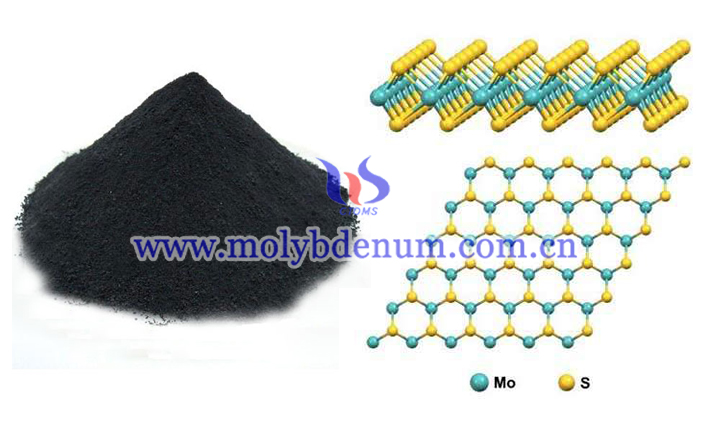
Molybdenum disulfide (MoS2) is the most famous of the single layer transition metal dichalcogenide (TMD) family. It has been used in bulk for many years as a solid state lubricant, this is due to its low coefficient of friction in addition to its high chemical and thermal stability. MoS2 can maintain a very good lubrication effect in mechanical parts that operate in vacuum. 

carbon motor brushes image

When the brush contains a certain amount of molybdenum disulfide. Although it is difficult to form a cuprous oxide film at high altitude, it can form a sulfide film with good lubricating effect. This film is tightly adsorbed on the surface of the slip ring, so that the brush still has good lubricating performance at high altitude. In addition, molybdenum disulfide has good water resistance and pressure resistance.

Molybdenum disulfide is also an ideal solid lubricating material in the aerospace field. It has a very low friction coefficient and a high yield strength. Therefore, combining the characteristics of the two, the development of a silver-based brush composite material with high conductivity, low friction factor and good mechanical properties is an urgent need for electrical contact components in the aerospace industry.

molybdenum disulfide image

Chinatungsten online produces professional molybdenum disulfide that is suitable for the electric brush industry, strictly controlling the particle size, water, acid value and other indicators. Our MoS2 can be for a variety of customer needs and purposes. 

If you have any inquiry of molybdenum disulfide, please feel free to contact us:
Tel.: +86 592 5129696/+86 592 5129595
Fax: +86 592 5129797

Scan QR code of Chinatungsten Wechat platform to follow up the daily latest price and market of tungsten, molybdenum and rare earth.

2020年11月24日星期二

Molybdenum Alloy Plugs to Pierce Stainless Steel Pipes

There are two kinds of steel pipes – stainless steel pipes and welded steel pipes, according to their production methods. Compared with welded steel pipes and other steels, stainless steel pipes are pierced with tools such as plugs and mandrels.

These piercing tools not only participate deformation, but also are the most important factors that determine whether the main processers of steel pipe production, such as piercing and pipe rolling can operate normally. As a matter of fact, the production process of seamless steel pipe also reflects the technical level of these tools. In other words, the research on internal deformation tools is an important subject of seamless steel pipe technology research.

molybdenum alloy plugs image

Molybdenum alloy plugs are used to pierce seamless tubes of different materials, such as stainless steel, brazing steel, high-temperature alloy steel and other special parts. As they work in high temperature and harsh environments, the material of plug requires the characteristics of high temperature strength, high temperature oxidation resistance, long service life, corrosion resistance and not easy to stain glass.

Therefore, the material of the plug usually adopts molybdenum alloy with a composition of Ti, Zr, C and Mo. Molybdenum alloy plug is produced in a powder metallurgy process, has a higher recrystallisation temperature and higher strength compared to pure molybdenum, and is readily deformable even at room temperature. These effects are due to mixed crystal formation between Mo and Ti as well as the precipitation of ZrC as a dispersoid.

molybdenum alloy plugs image

Actually, the materials to be used depends on what kinds of steel pipes to be pierced. Different materials of pipes have different characteristics and thus require plugs to meet different working conditions. As a professional manufacturer of molybdenum and tungsten, Chinatungsten Online can offer you various kinds of piercing plug. Certainly, customized designs are welcomed. Send us drawings and inform us its detailed application, we will offer you the best solution. 

If you have any inquiry of TZM plugs, please feel free to contact us:
Tel.: +86 592 5129696/+86 592 5129595
Fax: +86 592 5129797

Scan QR code of Chinatungsten Wechat platform to follow up the daily latest price and market of tungsten, molybdenum and rare earth.

2020年11月18日星期三

Amazing! 500 Bottle Caps Produced in One Minute with Hot Runner System

 500 plastic cups or 500 bottle caps are produced in one minute. Oh my god, it’s so amazing! Indeed, it is probably a fantasy to achieve such high efficiency with traditional production lines. But hot runner system has achieved and is constantly improved at present. 

Almost every industry, including construction, electronics, aviation, automotive, medical, food and beverage, more realizes the potential for gaining a competitive advantage. Injection molding is not only an efficient method of manufacturing precise plastic parts and components, but also reduces production time, has high precision and reduces material waste. It can produce plastic parts that are as strong as steel, or can be very soft and flexible.

TZM nuzzle tip image

When using the plastic injection molding process, the manufacture of any part starts with the mold. The molding system is divided into two categories: hot runner molds and cold runner molds. The hot runner uses a screw nozzle, which is fed by a pump through the barrel, while the cold runner uses a closed thermosetting mold. The main task of any runner system is to guide the plastic melt from the runner to the mold cavity. 

The system requires additional pressure to push the material through the flow channel. The frictional heat generated by the material in the runner mold flows through the runner and increases the temperature, thereby facilitating the flow. One of the best rewards of any project is to reasonably determine the size of the runner for a given component and mold design.

The nozzle is the key component of the hot runner mold. In the hot runner system, in order to maintain the molten state of the plastic in the nozzle, heat insulation must be as perfect as possible, and some nozzles need to be heated internally or externally, while the cavity needs to be cooled. The temperature difference between the two is usually 100~200℃. Therefore, the material and design of nuzzle should meet the thermal balance requirements in priority, which are necessary to avoid too much cold material in the nozzle to solidify and block, but also to avoid overheating of the plastic, casting or drawing, or even decomposition.

TZM rod image

The best material for machining nuzzles is titanium-zirconium-molybdenum alloy (TZM alloy). TZM nuzzle can maximize the utilization of materials and meet the requirements of plastic melt insulation and heating. In addition, molybdenum alloy nuzzle also has a very long service life, which can greatly reduce production costs. 

Chinatungsten Online is a very professional manufacturer of tungsten and molybdenum, with rich experience in the production of titanium-zirconium-molybdenum alloy rods. If you have any purchasing plan, please feel free to contact us.

If you have any inquiry of TZM rod, please feel free to contact us:
Tel.: +86 592 5129696/+86 592 5129595
Fax: +86 592 5129797

Scan QR code of Chinatungsten Wechat platform to follow up the daily latest price and market of tungsten, molybdenum and rare earth.