显示标签为“TZM alloy”的博文。显示所有博文

2025年1月25日星期六

Why TZM Alloy Is an Indispensable Material in High-temperature Industrial Applications?

TZM molybdenum alloy is a high-performance alloy based on molybdenum, with small amounts of titanium (Ti), zirconium (Zr), and carbon (C) added. Its name derives from the initials of these additive elements. As an advanced material widely used in aerospace, nuclear industries, and high-temperature industrial applications, TZM alloy is renowned for its exceptional melting point and high-temperature performance.

Molybdenum itself is a high-melting-point metal, with a melting point of 2623°C. The melting point of TZM molybdenum alloy, enhanced by the addition of trace elements, is comparable to that of pure molybdenum, exceeding 2600°C. This enables TZM alloy to maintain excellent structural stability in extreme high-temperature environments. The addition of titanium and zirconium not only reinforces the molybdenum matrix's grain structure but also improves the alloy's oxidation resistance and high-temperature strength, making its overall performance under high-temperature conditions far superior to pure molybdenum.

TZM alloy rods photo

In terms of high-temperature performance, TZM molybdenum alloy demonstrates exceptional creep resistance and thermal stability. Even in high-temperature environments ranging from 1200°C to 1400°C, TZM alloy retains its mechanical strength and deformation resistance. Its creep life is significantly longer than that of pure molybdenum and other molybdenum alloys. Thanks to the dispersion strengthening effect of carbides within the alloy, its high-temperature creep resistance is further enhanced, making it ideal for applications in high-temperature furnace components, rocket nozzles, molds, and nuclear reactor components under extreme conditions.

However, TZM molybdenum alloy also has limitations. For instance, it is prone to forming volatile oxides in oxidizing environments. As a result, it is typically used in vacuum or protective atmospheres, or with protective coatings to extend its lifespan. Overall, due to its high melting point and outstanding high-temperature performance, TZM molybdenum alloy is an indispensable material in high-temperature industrial applications.

TZM alloy tubes photo

Chinatungsten Online is a professional manufacturer of tungsten and molybdenum for nearly thirty years. We can supply molybdenum products in customized designs. Please free feel to contact us when you got the purchasing plans.

If you have any inquiry of TZM alloy products, please feel free to contact us:
Email: sales@chinatungsten.com/sales@xiamentungsten.com
Tel.: +86 592 5129696/+86 592 5129595

Scan QR code of Chinatungsten WeChat platform to follow up the daily latest price and market of tungsten, molybdenum and rare earth.

2021年12月23日星期四

What Are Strengthening Mechanisms of TZM Alloy

TZM is molybdenum’s prime alloy and is an alloy of titanium, zirconium and carbon. This alloy is the most popular materials among various kinds of molybdenum metal and molybdenum alloys. 

With better high temperature resistance, greater strength, it can be used as a mold for high-temperature heat processing of metals. In addition, to be applied in the hot runner system as nuzzle tip, it can maintain the plastic melting state and helps the formation of plastic products. 

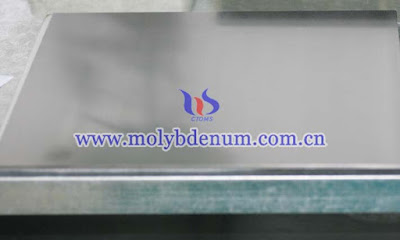
TZM alloy plate photo

For the strengthening mechanisms of TZM alloy, the types are as following: 

1. Solid solution strengthening

The solid solution strengthening of TZM is to add Ti, Zr and other alloying elements to dissolve in the Mo matrix. Among them, the strengthening effect of Zr is the most obvious, followed by Hf. This is because the base lattice of Mo is distorted. The larger the difference in the size of the solute and solvent atoms during solid solution, the better. The effect of solid solution strengthening is relatively stable above 1000 ℃, but it is not as good as deformation strengthening, but in practice, due to the limitation of solubility, the addition amount is not very large.

2. Second phase strengthening

When the second phase is uniformly distributed in the matrix phase with fine dispersed particles, it will have a significant strengthening effect, which is called the second phase strengthening. The strengthening of the second phase in TZM is due to the addition of Ti, Zr and C in Mo to form fine carbide particles. Their existence can effectively hinder the movement of dislocations and produce the strengthening of the second phase.

TZM alloy rod photo

3. Deformation strengthening

TZM alloy is required to be below the recrystallization temperature, and the effect of deformation strengthening increases as the amount of deformation increases. In the process of deformation, the crystal grains of the alloy elongated along the processing direction, the crystal lattice is raised, the dislocation density increases, and the grains are produced, which increases the strength of the alloy. The strength of the annealed alloy can be significantly reduced. If the alloy is nitridated while annealing, nitriding points are generated in the matrix after nitriding, and the hardness and tensile strength of the alloy can be further improved.

If you have any inquiry of molybdenum alloy products, please feel free to contact us:
Tel.: +86 592 5129696/+86 592 5129595
Fax: +86 592 5129797
Scan QR code of Chinatungsten Wechat platform to follow up the daily latest price and market of tungsten, molybdenum and rare earth.
2018年4月10日星期二

TZM Alloy’s Breaking Tenacity Researching

Due to TZM alloy has great high temperature performance so it play an important role in national economy and sciences technologies. TZM piercing point is an important tool for producing steel tube. It can drill stainless steel, heat resistant steel and rock drill steel and the server life is 300 times than steel mould. During drill process, the piercing point easy broke this is because at the heat and cool condition the piercing point suffer pressing, pulling, twisting and other complex stress which easy occurs cold hot fatigue crack with drill times increase the cracks extent lead to the piercing point broke.

ZTM alloy sheet picture

Breaking tenacity is a aggregative indicator for alloy's strengthening and plasticity, researching breaking tenacity for alloy technics investigation improving, machine design, inspection and maintenance is essential part. So researching breaking tenacity for explore new production technology and heating-treating process has significant meaning. The research data are as following.

1. TZM alloy after 1200℃vacuum treatment the breaking tenacity KIC valve is higher than sintering's.

2. After 1300℃, 1400 ℃ vacuum treatment and 1300℃, 1400℃,1500℃ hydrogen treatment the breaking tenacity KIC valve is lower than sintering's.

3. TZM alloy breaking mainly because the component has micro-crack, cavity and impurity so the raw material powder's properties and purity control should very strict.

4. TZM alloy at 1300℃ employ heat-treatment can't improve alloy's breaking tenacity. Only at 1200℃ vacuum treatment can improve breaking tenacity and the properties of alloy improves as well.

If you have any inquiry of molybdenum products, please feel free to contact us:
Email: sales@chinatungsten.com/sales@xiamentungsten.com
Tel.: +86 592 5129696/+86 592 5129595
Fax: +86 592 5129797

Scan QR code of Chinatungsten Wechat platform to follow up the daily latest price and market of tungsten, molybdenum and rare earth.

2018年4月8日星期日

Hot-dip Aluminized Coating on TZM Alloy

TZM alloy(Mo-0.5 Ti-0.08 Zr-0.02(wt%))is kind of a high temperature alloy of molybdenum base alloy which are widely used in high temperature nuclear reactor, aviation, electricity generation and as the high temperature resistance material and structural material of chemical industry. However, alloy in the high temperature is easy oxidation and so it will limit alloy's application field. After studies found when the temperature higher than 540℃ the molybdenum of TZM alloy will oxidation quickly to form non-protection MoO3 oxide layer. This oxide layer will volatilize at 750℃ and make molybdenum matrix oxide and volatilize which is bad for alloy’s properties.

TZM alloy picture

Using hot-dip aluminized coating technique to make aluminized layer on TZM alloy surface to improve high temperature oxidation resistance. The hot-dip temperature is 730℃and hot-dip time is 3min or 5min. Clad layer is combine with surface aluminized layer and inner alloy layer and the inner alloy layer is mainly Al4Mo and Al5Mo phase. Besides, the micro-hardness of inner alloy layer reach at HV760. The clad layer and substrate is metallurgical bonding. What’s more, aluminized layer has good high temperature oxidation resistance property.

If you have any inquiry of ZTM alloy sheet, please feel free to contact us:
Email: sales@chinatungsten.com/sales@xiamentungsten.com
Tel.: +86 592 5129696/+86 592 5129595
Fax: +86 592 5129797

Scan QR code of Chinatungsten Wechat platform to follow up the daily latest price and market of tungsten, molybdenum and rare earth.

2018年3月28日星期三

Using TZM Alloy to Produce Titanium Isothermal Forging Material

Titanium alloy has some special requirements on isothermal forging, for example, there are some special requirements on mold temperature, pressure and dwell time. During isothermal forging the mold temperature should be at 850~950 ℃ and pressure should be control at 100~120 MPa. Besides, the dwell time should be at 5~15 minutes, and based on the above requirements, commonly used nickel-base superalloy, insoluble metals and their alloys (TZM alloy), ceramic material, such as silicon nitride, silicon carbide and so on as titanium isothermal forging material. The experiment found that compared to the performance of other material TZM alloy has more favorable advantages. TZM alloy not only has good temperature resistance and high strength property, but the die service life also has a strong advantage.

Using TZM alloy as sophisticated forgings materials during isothermal forging, there may be has some crack happening in forging die to cause damage, and forging die damage may be caused by the following reasons:
1. The forging die happen some local plastic deformation and dimensional change;
2. Effected by the lubricant and protective gas, the embedding of material cause wearing;
3. The cracks concentrated on the place where the local stress is highly.

In order to prevent forging die early damage, understanding the carrying capacity before the crack spread of TZM alloy forging die, understanding of the conditions of forging die appeared, have important significance for judging the operation reliability and evaluation the forging die service life.

The cracks in the forging die are often unavoidable, so to slow the pace of cracks expansion has a certain influence on the service life of the mold. It was found that if the dwell time is too long, there will have a certain impact on crack formation and expansion. So isothermal forging pressing time should be as short.On the other hand, forging die at preheating and cooling will produce high thermal stress, causing cracks. In order to avoid large thermal stress, people should pay special attention to preheat uniformity.

If you have any inquires concerning molybdenum products, please don't hesitate to e-mail us by : sales@chinatungsten.com or info@chinatungsten.com

2018年3月27日星期二

Surface Oxidation and Segregation of TZM Alloy

Segregation phenomenon refers to the constituent elements of the alloy uneven distribution in the crystallization. The experiment found that TZM alloy added element segregation occurs at ultrahigh vacuum and at different temperature ranges. Titanium segregation starts from 840 ℃ and zirconium segregation is beginning from 1100 ℃. Titanium's maximum temperature segregation is 1150 ℃ and zirconium is 1350 ℃. Higher than the above temperature, the surface concentration of titanium and zirconium are decreasing, and higher than 1400 ℃titanium will disappear the same surface. Segregation temperature is similar to the required temperature of these two elements diffuse to the molybdenum substrate. The temperature of segregation disappearance depends on the balance of the additional diffusion kinetics.

molybdenum nozzle picture
In TZM alloys, titanium and zirconium element has a great affinity for oxygen, so oxidation reaction with oxygen is easily. Stability of TiO2 and ZrO2 promotes the surface material to absorbent the oxygen, free standard enthalpy of formation of these two oxides is lower than MoO2, and both vapor pressure is smaller than MoO2. Thus, the surface oxygen can diffuse to the alloy and preferential oxidation with the additive of alloy producing oxides precipitate. TZM alloy samples after 1390 ℃ treatment, the alloy surface is covered with a large amount of oxide precipitation. After milling alloy surface, the inside oxygen precipitates content only one-tenth of alloy surface.

We can confirm TZM alloy surface oxidation by microstructure oxide precipitation tests of the alloy. The shape and form of oxide precipitates has big difference with carbide precipitate. In an oxidizing atmosphere, at 1200 ℃ alloy starts decarburization reaction, oxygen is gradually dissolved and the original oxide oxidation occurs.

If you have any inquires concerning molybdenum products, please don't hesitate to e-mail us by : sales@chinatungsten.com or info@chinatungsten.com

2018年2月26日星期一

New Hybrid Molybdenum Powder Used For TZM Alloy Manufacturing

In industry, manufacturers usually add alloy elements and carbon for TZM alloy manufacturing. However, this method has its shortcomings, which is prone to melting and segregation during melting, to form grain boundary segregation, so alloy's fragility and recrystallization temperature will increase. Especially in the case of Ti presence in the alloy, due to Ti high vapor pressure, making it difficult to control the final content in the alloy, so the producer usually only by virtue of the adjustment smelting parameters and alloying elements doped quantity.

The new hybrid molybdenum powder is conductive to produce powder mixture in metallurgy technique or it can adjust alloy’s structure during production, so it is possible to reduce the brittleness of the alloy. Using impregnation and carbon nitride, with the corresponding method of sintering and smelting process, and can be produced TZM alloy having a low N2 content.

TZM round tube picture

Using new hybrid molybdenum powder for TZM alloy manicuring:
1. A certain percentage of TiC, TiN and ZrN is added to TZM powder mixture, and using the mill to grind them into powder particles less than 5um.
2. In the mixer, 31% TiC, 48% TiN, 14% ZrN and 7% of fine carbon black is prepared a premix. Then 15% premix and 85% MoMP is slowly added to the mixer, mixed for one hour to prepare a mixture. The mixture is used as the parent group for the final 1:20 of TZM powder mixture production.
3. 5% mixture and 95% MoMP was placed in a mixer and mixed for 15 minutes, then after -150um sieved to obtain new hybrid molybdenum powder for TZM alloy manufaturing.
4. Using powder metallurgy method produce sintered blank, then after subsequent processing to produce TZM alloy.

If you have any inquires concerning molybdenum products, please don't hesitate to e-mail us by : sales@chinatungsten.com or info@chinatungsten.com

2018年2月25日星期日

TZM Alloy Strengthening Ways

TZM alloy has three strengthening mechanism, which is solid solution strengthening and second phase strengthening caused by titanium, zirconium, carbon and deformation strengthening caused by subsequent processing of produce. However, there are other strengthening ways, such as adding rhenium, carbide, rare earth oxides, staple fibers and neutron radiation and so on. These methods can improve alloy's properties.

TZM alloy La2O3 picture

Rhenium Elements Strengthening

Doped alloying elements in TZM alloy will great improvement molybdenum brittleness and improve the performance of the alloy. Besides, doped rhenium in the alloy, not only can improve the high temperature properties of the alloy, and can significantly improve the properties of the alloy at room temperature. Rhenium occur solid solution reaction with the molybdenum substrate to form toughness and dense solid solution crystal structure. During bending fracture, molybdenum-rhenium solid solution is mainly transgranular fracture. And molybdenum-rhenium solid solution absorbs a lot of breaking energy can effectively improve the properties of the alloy at room temperature. However doped rhenium in alloys can inhibit titanium, zirconium solid solution in molybdenum, resulting in a large number of pores and a second phase particles gathering in rhenium-molybdenum alloy grain boundaries, which have an adverse effect on the strength of the alloy.

Rare Earth Oxide Strengthening

Doped with rare earth oxides in TZM alloys is in favor of grain refinement, and with doped quantity of rare earth oxides increase, the grain refining effect is more obvious. The common rare earth oxide is La2O3. Doped a certain amount of La2O3 particles in the alloy, these particles will also evenly distributed in the grain boundary and grain, so that the toughness of TZM alloy has been significantly strengthened.

Neutron radiation strengthening

In the range of 25 ~ 450 ℃ TZM alloy after neutron irradiation, the elongation sharp declines, but the breaking strength increases with test temperature increases. In addition, the alloy at 700 ℃ neutron radiation, a significant increase in yield strength, but the temperature exceeds 700 ℃, its strength did not change significantly.

If you have any inquires concerning molybdenum products, please don't hesitate to e-mail us by : sales@chinatungsten.com or info@chinatungsten.com

2018年2月11日星期日

TZM Alloy Mechanical Property Influence Factors

There are many influence factors affecting TZM alloy's mechanical property, including production method, deformation processing, annealing temperature and neutron radiation treatment.

Using different production method to produce TZM alloy the mechanical property of alloy is vary. Using arc melting method and powder metallurgy method to produce TZM alloy the high temperature property and mechanical property has great improved, which is better than pure molybdenum’s. When the temperature is lower than 1000 ℃, the performance of the two methods obtained TZM sheet is considerably, but using arc melting method obtained TZM bars strength is better than powder metallurgy obtained. When the temperature is higher than 1200 ℃, powder metallurgy method produced TZM plates and bars performance is equivalent, but they poorer than using arc melting method produced.

TZM alloy picture

TZM alloy after hot-forging and extrusion process, the elongation at room temperature up to 33%. Compared with the un-deformation TZM alloy the elongation has been greatly improved, indicating that proper treatment can improve the plastic deformation of the alloy. In addition, the annealing process can also affect the mechanical property and structure of the alloy. As the annealing temperature increase, TZM alloy’s hardness and tensile strength decreased, plastic increased. TZM alloy after neutron irradiation, strength and hardness significantly increased, while the elongation decreased sharply, but fracture toughness decreases to a lesser extent.

In addition, the strain rate has a greater influence on the TZM alloy’s mechanical property. At 400 ℃, the tensile strength of the alloy substantially does not vary with strain rate changes. At room temperature and 1000 ℃, the strength of the alloy with the change of strain rate were increased 30% and 20% separately. At 1200 ℃, the strain rate increases, the intensity of TZM alloy is increased 80%. At 1400 ℃, the strength of the alloy increased from 20MPa to 135MPa. It is shows that when the temperature is below 1000 ℃, strain rate has little effect on the alloy ‘s strength. When the temperature is higher than 1200 ℃, with temperature increasing, strain rate influence on the strength is more obvious.

If you have any inquires concerning molybdenum products, please don't hesitate to e-mail us by : sales@chinatungsten.com or info@chinatungsten.com

2018年2月9日星期五

TZM Alloy Deoxidation Mechanism Analysis during Vacuum Sintering

The experiment found that TZM alloy during powder metallurgy sintering process mainly has two kinds of deoxidation mechanism: the first one, metal oxide of carbon reduction system to form metal carbides and CO; the second one, MoO2 happening disproportionation reaction at vacuum high temperature to form metal Mo and MoO3 gas, where the MoO3 gas will be discharged by vacuum system.

Firstly, analysis the influence of carbon content on TZM alloy deoxidation during vacuum sintering. Experiment arrangement as follows: adding 0.5% TiHx and 0.09% ZrHx into molybdenum powder, and then dividing the sample into three parts, in the sample were added 0.04%, 0.07%, 0.10% different proportions of carbon, and finally made TZM alloy rods. Tested oxygen content and the carbon content of TZM alloy bar found C element content and TZM alloy deoxidation effect is proportional to, but excess carbon can cause alloy component failure.

molybdenum alloy picture

In addition, the oxygenium of molybdenum mixed powder mainly decisions by oxygen content of molybdenum powder. Molybdenum powder after the reduction reaction, the mainly existing way of oxygen is molybdenum oxide, which the most stable is MoO3 and MoO2, and MoO3 in a vacuum and high temperature will volatilize into a gas, so at high temperature molybdenum oxide mainly exists by MoO2 form. The experiment found that in the case of high temperatures and the absence of air, MoO2 happen disproportionation reaction to produce metal Mo and gaseous MoO3, and gaseous MoO3 will be discharged by vacuum system.

TZM alloy deoxygenation process mainly achieved by carbon reaction and disproportionation reaction of MoO2 which occurs in high-temperature vacuum sintering process. The reaction temperature and air pressure of product in vacuum furnace will have great impact on the quality of these two reactions. Reducing the partial pressure of product and improving vacuum degree can reduce the deoxygenation reaction temperature of the beginning which is good for reducing oxygen content of TZM alloy.

If you have any inquires concerning molybdenum products, please don't hesitate to e-mail us by : sales@chinatungsten.com or info@chinatungsten.com

2018年2月4日星期日

TZM Alloy TIG Welding

TZM alloy because of its good high-temperature properties are widely used in high temperature mold industry, aerospace, industrial machinery and other industries. TZM alloy as a structural material used in these areas typically require the desired shape and configuration which can achieved by welding skills. The experiment found that, in order to prevent TZM oxidation or inhaled nitrogen and other impurities in the welding process, a better method is TIG welding. Using TIG welding, it can make TZM alloy during welding process protect by inert gas (argon) to cut off the air and to prevent oxidation or nitrogen elements intrusion. The experiment found that the optimum welding parameters are as follows: welding speed 4mm / s; argon gas flow: 10L / min; welding current: 210A.

TZM alloy after TIG welding to do seam X-ray inspection found that when the welding current is 210A, the weld is flat and there is no holes and cracks on TZM surface, smooth appearance on the alloy. Observing the microstructure of welded joint found, the weld zone has coarse grains and there are some small holes, but weld microstructure is dense and no cracks. On the other hand, TZM alloy coarse grained zone and the transition zone affected by the heat of the welding process to virtually eliminate the original structure and to formed a relatively coarse equiaxed crystalline, while the original base material still maintaining crystalline sheet organizational structure.

TZM TIG welding photo

Observing its tensile strength found that the average tensile strength of welding is significantly less than the original base material. The increase of the elongation of the alloy is due to the thermal effect of the welding process to eliminate the portion of fiber texture which is formed by rolling, so that the edge of the weld is "softening." Observing the tensile fracture of TZM alloy after welding found the welding coarse grained area is not lamellar crystals, but still showing intergranular brittle fracture morphology. Coarse equiaxed grain replaced lamellar crystals, thus the weak strength of the material, but at some certain extent, improving the plastic of material can basically meet the requirements of ordinary structural.

If you have any inquires concerning molybdenum products, please don't hesitate to e-mail us by : sales@chinatungsten.com or info@chinatungsten.com