2022年1月27日星期四

TZM Alloys for Radiation Shielding and Heat Exchangers

TZM, also known as titanium zirconium molybdenum, is a mature molybdenum alloy. The main advantage of using it is that it can well support applications where high strength and creep resistance are highly required. It is a stable metal and is not affected by temperature reduction and works well without weakening or softening.

Alloying facilitates the vacuum arc casting process by which complete melting and mixing of molybdenum oxide and alloy is accomplished. Therefore, with the help of the two most important consolidation techniques, vacuum arc casting (VAC) and powder metallurgy (PM), a wide variety of molybdenum alloy mill products and molybdenum alloys can be manufactured. Here, users can obtain an alloy of their own choice by using this method by creating the appropriate proportions of the metals needed for a specific application. Mill products that can be created through this course include forged billets, bars, bars, plates, sheets, foils, and more.

TZM alloy piercing plug image

These TZM products can be used in some important applications including structural furnace components, die inserts for casting aluminum, rotating anodes for X-ray tubes, hot stamping tooling, rocket nozzles and electrodes.

In addition to general use and its use in industry, this metal has many more applications and is also found in the field of military use. Torpedo engines are the best example of TZM alloys in military applications. This alloy is used in rocket nozzles, valve bodies, nozzle throats and gas pipes. The alloy is a metal with a very high melting point, which works well for die casting mold activities for various ferrous and non-ferrous metals. 
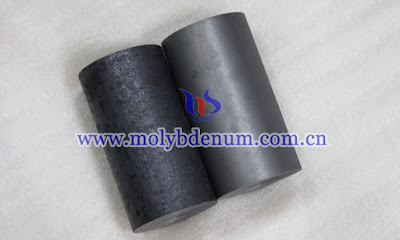
TZM alloy rod image

It is also suitable for the bulb furnace mechanism of color TV, platinum-rhodium alloy is used for molybdenum plating alloy, and high temperature glass melt material is required to withstand the conditions generated in the long-term high temperature shock process. In addition to this, TZM alloys are also suitable for radiation shielding, heat exchangers, cages, rails, etc.

If you have any inquiry of TZM alloy sheet, please feel free to contact us:
Email: sales@chinatungsten.com/sales@xiamentungsten.com
Tel.: +86 592 5129696/+86 592 5129595
Fax: +86 592 5129797

Scan QR code of Chinatungsten Wechat platform to follow up the daily latest price and market of tungsten, molybdenum and rare earth.

2022年1月20日星期四

TZM Plate or TZM Sheet for Structural Furnace Components

Metal sheet/plate is a thin sheet/plate made from different materials of tungsten, tungsten alloys, molybdenum and molybdenum alloys. The sheet could be formed by hot rolling procedures and is polished further with different finishes depending on the applications.

TZM has several valuable properties such as high strength, creep resistance, hardness and low vapor pressure in high temperature environments. Sheets/plates made of TZM alloy thus have low expansion coefficient, excellent heat and corrosion resistance and good machinability.

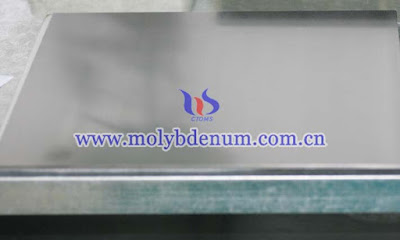
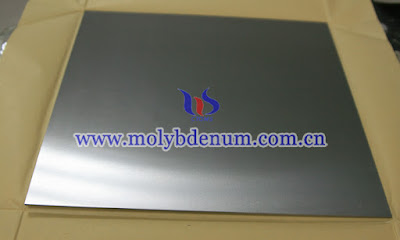
TZM plate image

Compared with pure molybdenum plate, TZM plate has more stable crystal structure and higher recrystallization temperature. This is due to the doping of small amounts of zirconium and titanium into the molybdenum matrix. In addition, the composite carbides Mo2C, TiC, and ZrC with extremely fine sizes refine and suppress the grains of molybdenum, thereby contributing to the easier welding and creep resistance of TZM than pure molybdenum.

High temperature TZM plate is a popular molybdenum-based alloy used in structural furnace components such as shielding and support components because of its high creep resistance. In addition, TZM molybdenum plates are ideal for making high temperature, high strength TZM molybdenum forging dies for isothermal forging, ferrous and non-ferrous metal castings and molybdenum TZM perforated plugs. Additionally, TZM sheets are an excellent choice for high recrystallisation and solderable temperature materials used to produce parts for aerospace applications.

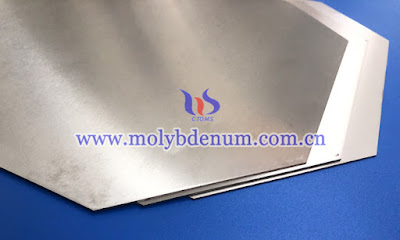
TZM sheet image

Chinatungsten Online/CTIA GROUP is a leading TZM sheet supplier, which can supply various types of molybdenum, TZM and lanthanide molybdenum plates that meet consistently high standards of flatness, roughness and machinability. We are also able to provide fast lead times and handle large volumes of contracts.

At the same time, we produce a wide range of molybdenum and molybdenum alloy products using powder metallurgy (PM) method. The availability of products from this process gives users many options in selecting a material to satisfy their specific application requirements.

If you have any inquiry of TZM plate, please feel free to contact us:
Email: sales@chinatungsten.com/sales@xiamentungsten.com
Tel.: +86 592 5129696/+86 592 5129595
Fax: +86 592 5129797

Scan QR code of Chinatungsten Wechat platform to follow up the daily latest price and market of tungsten, molybdenum and rare earth.
2022年1月5日星期三

Silicon Carbide Rods Are Used in Various Types of Electric Industrial Furnaces Thanks to its Characteristics

As a new type of electric heating element, silicon carbide rods are widely used in various types of electric industrial furnaces. The main composition of this rod is silicon carbide that is an artificial abrasive. Generally, silicon carbide is divided into black silicon carbide and green silicon carbide. The later one owns greater purity.  

In addition to being used in the abrasive industry, silicon carbide is used in the electrical industry to produce silicon carbide electric heating elements - silicon carbide rods, which have the characteristics of electrical conductivity, heat conduction, and long service life.

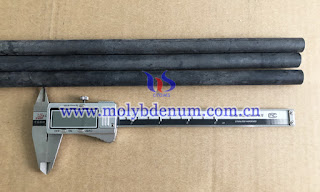
silicon carbide rods photo

Antioxidant properties of silicon carbide rod

After the silicon carbide rod is heated by electricity, the temperature will rise rapidly. Generally, in the air, when the temperature of the rod body reaches 800 degrees Celsius, the surface of the rod begins to undergo oxidation reaction. As the temperature continues to rise to 1000 to 1300 degrees Celsius, the heating part of the silicon carbide rod will react with air to produce carbon dioxide and silicon dioxide. Silica will condense on the surface of the rod to form a dense protective film.

When the temperature of the rod body continues to rise to about 1550, the thickness of the protective layer will become thicker due to the continuous production of silicon dioxide, which can isolate the silicon carbide rod from the air, which is effective for the formation of the rod body, thereby starting to reduce the oxidation rate. However, the silicon dioxide protective layer also has a certain melting point. If the rod body continues to heat up to more than 1600 degrees, the silicon dioxide protective film will be destroyed due to the excessive temperature and fall off and other reactions, and then the oxidation rate of the silicon carbide rod will resume. 

silicon carbide rods photo

This situation should be avoided as much as possible during use, and the structure of the resistance furnace or industrial electric furnace should be designed reasonably. Pay attention to the position of the rod body during the installation to avoid excessive local temperature or other electrical conditions during use. Mistakes cause the temperature of the silicon carbide rod to be too high, which greatly reduces the service life of the rod body.

If you have any inquiry of silicon carbide rods, please feel free to contact us:
Email: sales@chinatungsten.com/sales@xiamentungsten.com
Tel.: +86 592 5129696/+86 592 5129595
Fax: +86 592 5129797

Scan QR code of Chinatungsten Wechat platform to follow up the daily latest price and market of tungsten, molybdenum and rare earth.
Energy Saving SiC Heating Elements and MoSi2 Elements for Electric Furnace

There are several types of heating elements available for industrial heating. Generally speaking, metallic heating elements such as nichrome wire (Ni-Cr) are commonly used in lower temperature ranges (up to 1100°C), and MoSi2 elements are often used in high-temperature ranges (1200-1900°C). Silicon carbide (SiC) heating elements cover between the two at temperatures up to 1600°C.

Silicon carbide is a ceramic material with relatively high electrical conductivity when compared to other ceramics. The uniqueness of this material is that it has high acid and corrosion resistance, so it can be used in harsh environments. Therefore, the heating elements are often used in the glass, powder metallurgy, and ceramic industries. Products from these industries emit exhaust gas and generate these harsh atmospheres.

MoSi2 elements photo

Elements are produced by pressing or extruding and then sintering in high temperature furnace. Typical SiC heating elements are rods or tubes, with diameters between 3 and 77 mm and lengths from 100 to 1000 mm. They have metalized ends for electrical connections, and sic heater often have both connections at one end, with two helical slots which stop short of the other end, thus approximating a twisted hairpin form.

As heat sources for electric furnaces, SiC heating elements can save approximately 4-5% of its heating costs in the temperature range of 800-1600°C (1472-2912°F). This savings has been achieved by reducing the heat loss out of the cold ends of the element, making sic heater a direct replacement item for current products. 

SiC heating elements photo

“Energy saving” and “sustainability” are globally becoming very important in today’s business. All of us are expected to take concrete actions to reduce energy consumption in every part of our business activities. Chinatungsten Online and CTIA Group is excited to introduce this product in the spirit of world energy savings and sustainability, and we look forward to providing these savings to our customers.

If you have any inquiry of SiC heating elements, please feel free to contact us:
Tel.: +86 592 5129696/+86 592 5129595
Fax: +86 592 5129797

Scan QR code of Chinatungsten Wechat platform to follow up the daily latest price and market of tungsten, molybdenum and rare earth.

2021年12月23日星期四

How to Choose Sintering Methods for Titanium-Zirconium-Molybdenum (TZM) Alloy?

The earliest produced in the industry is titanium-zirconium-molybdenum (TZM) alloy, which is a molybdenum alloy containing 0.4%-0.55% titanium, 0.06%-0.12% zirconium and 0.01%-0.04% carbon. The total amount of alloying element does not exceed 1%. 

titanium-zirconium-molybdenum alloy rod photo

There are two main sintering methods for titanium-zirconium-molybdenum alloy: hydrogen protection sintering and vacuum sintering as following: 

1.Hydrogen protection sintering: the product is sintered under the protection of hydrogen. 

During the process, due to the reduction effect of hydrogen, the oxides in the molybdenum powder will be replaced by hydrogen, reducing the oxygen content in the material to below tens of ug/g. For molybdenum alloys with active elements such as titanium and zirconium, due to the high activity of alloying elements, they will react with impurity gases in hydrogen to form oxides, nitrides, hydrides, etc., resulting in high impurity content in TZM alloy. It seriously affected its mechanical properties. Therefore, vacuum sintering is more popular with most factories.

TZM piercing plugs photo

In the process, generally a slight excess of carbon element (relative to the predetermined composition) is added to deoxidize the metal oxide through the reduction of carbon element. Among them, there are two main types of deoxidation mechanisms: metal oxides in the carbon reduction system produce metal carbides and CO, and MoO2 undergo disproportionation reactions under vacuum and high temperature to produce metal Mo and MoO3 gases which are extracted.

In the disproportionation reaction of metal oxides and MoO2 in the carbon reduction system, the temperature at which the two reactions start is related to the partial pressure of the product gas in the furnace. As the partial pressure of the product in the furnace decreases, the reaction start temperature gradually decreases. Therefore, increasing the vacuum degree in the furnace and reducing the partial pressure of the product gas can lower the temperature at which the deoxygenation reaction proceeds, which is beneficial to the deoxygenation.

If you have any inquiry of molybdenum alloy products, please feel free to contact us:
Tel.: +86 592 5129696/+86 592 5129595
Fax: +86 592 5129797

Scan QR code of Chinatungsten Wechat platform to follow up the daily latest price and market of tungsten, molybdenum and rare earth.

What Are Strengthening Mechanisms of TZM Alloy

TZM is molybdenum’s prime alloy and is an alloy of titanium, zirconium and carbon. This alloy is the most popular materials among various kinds of molybdenum metal and molybdenum alloys. 

With better high temperature resistance, greater strength, it can be used as a mold for high-temperature heat processing of metals. In addition, to be applied in the hot runner system as nuzzle tip, it can maintain the plastic melting state and helps the formation of plastic products. 

TZM alloy plate photo

For the strengthening mechanisms of TZM alloy, the types are as following: 

1. Solid solution strengthening

The solid solution strengthening of TZM is to add Ti, Zr and other alloying elements to dissolve in the Mo matrix. Among them, the strengthening effect of Zr is the most obvious, followed by Hf. This is because the base lattice of Mo is distorted. The larger the difference in the size of the solute and solvent atoms during solid solution, the better. The effect of solid solution strengthening is relatively stable above 1000 ℃, but it is not as good as deformation strengthening, but in practice, due to the limitation of solubility, the addition amount is not very large.

2. Second phase strengthening

When the second phase is uniformly distributed in the matrix phase with fine dispersed particles, it will have a significant strengthening effect, which is called the second phase strengthening. The strengthening of the second phase in TZM is due to the addition of Ti, Zr and C in Mo to form fine carbide particles. Their existence can effectively hinder the movement of dislocations and produce the strengthening of the second phase.

TZM alloy rod photo

3. Deformation strengthening

TZM alloy is required to be below the recrystallization temperature, and the effect of deformation strengthening increases as the amount of deformation increases. In the process of deformation, the crystal grains of the alloy elongated along the processing direction, the crystal lattice is raised, the dislocation density increases, and the grains are produced, which increases the strength of the alloy. The strength of the annealed alloy can be significantly reduced. If the alloy is nitridated while annealing, nitriding points are generated in the matrix after nitriding, and the hardness and tensile strength of the alloy can be further improved.

If you have any inquiry of molybdenum alloy products, please feel free to contact us:
Tel.: +86 592 5129696/+86 592 5129595
Fax: +86 592 5129797
Scan QR code of Chinatungsten Wechat platform to follow up the daily latest price and market of tungsten, molybdenum and rare earth.

2021年11月29日星期一

What Are the Benefits of Metal Plating on Molybdenum Copper Alloy

Molybdenum is a non-ferrous metal with high melting point, high strength, high hardness, wear resistance, and good thermal and electrical conductivity, while molybdenum copper alloy (Cu-Mo alloy) is a pseudo-alloy made by copper and molybdenum that does not solidify with each other.

This alloy contains less copper, so it basically possesses most of the physical and chemical properties of molybdenum, and also has the characteristics of copper at the same time, that is, it has high electrical conductivity, high thermal conductivity, small expansion coefficient, good corrosion resistance, non-magnetic and good processing properties, etc.

gold plated molybdenum copper carrier image

Given the broad application prospects., the material is widely used in many fields such as metallurgy, machinery, petroleum, chemical industry, national defense, aerospace, electronics, nuclear industry and so on. There are mainly: vacuum contacts, conductive heat dissipation components, instrumentation components, rockets that are used at a slightly lower temperature, high-temperature components of missiles, and components in other weapons, such as range extenders. At the same time, it is also used for solid sealing, sliding friction reinforcing ribs, water-cooled electrode heads in high-temperature furnaces, and electro-machined electrodes.

In actual use, molybdenum-copper alloys are often subjected to surface modification treatments such as electroplating and coating to meet specific functional requirements on their surfaces, such as high-temperature brazing and reducing contact resistance. However, the surface of Cu-Mo alloy is very easy to oxidize, and the chemical properties of the oxide film are very stable, the surface wettability is poor, and it is very difficult to perform surface treatment. Therefore, the gold plating can greatly improve its conductivity and brazing performance. It meets the application requirements in military electronics and aerospace products.

molybdenum-copper alloy plate image

For regular metal plating, Ni, NiAu, NiAg, or Au plating are the most common. The thickness of plating is about 3~5 microns and gold plating is about 1 micron. Sometimes, AuSn plating is required. 

Chinatungsten Online can provide customized molybdenum copper alloy with effective thermal conductivity and good high-temperature tolerance.

If you have any inquiry of gold plated molybdenum copper carrier, please feel free to contact us:
Email: sales@chinatungsten.com/sales@xiamentungsten.com
Tel.: +86 592 5129696/+86 592 5129595
Fax: +86 592 5129797

Scan QR code of Chinatungsten Wechat platform to follow up the daily latest price and market of tungsten, molybdenum and rare earth.